


The Aftershocksof October 7, Three Years On
October 2026
Hamas’ October 7 attack catalyzed a tectonic shift that upended an already fragile regional order. Precedents were shattered, the unwritten rules of gray-zone warfare erased, and three years later, the aftershocks are still being felt.
Israel continues to fight what it describes as a seven-front war, with significant tactical achievements but few conclusive strategic victories. Israel severely degraded Hamas’ and Hezbollah’s military capabilities, while Ahmed al-Sharaa’s forces toppled Bashar al-Assad and pushed his Iranian backers out of Syria. Yet Iran’s regime still stands after two rounds of war with Israel and the United States, the latest still ongoing nearly eight months later.
Saudi-Israel normalization, which seemed within reach in September 2023, now appears years away. Yet Lebanese and Israeli diplomats have participated in U.S.-brokered negotiations, and Israeli and Syrian officials maintain a military deconfliction channel. Israel is simultaneously more militarily integrated into the Middle East and more diplomatically isolated internationally.
Remarkably, Benjamin Netanyahu remains prime minister despite having presided over the failures of October 7, and faces elections in less than three weeks.
The past three years have been a long, dark night. Here’s to hoping that dawn is on the horizon. The following is a compilation of reflections from the IPF policy team.

Rachel Brandenburg, Washington Managing Director and Senior Policy Analyst
The Political Afterlife of October 7 Trauma
Dan Rothem, Senior Policy Analyst

October 7 hardened and accelerated trends in Israeli society and politics. Three stand out.
First, dehumanization and psychological intransigence: The scale and cruelty of Hamas’ terrorist attack, followed by the hostage ordeal, led many Israelis to see Gazans as one hostile mass, equating civilians with Hamas. Mainstream media rarely showed Palestinian suffering, and calls for collective punishment moved from the margins toward the center. Trauma and grief produced a defensive mindset that resists alternative information.
Second, hawkishness and strategic tunnel vision: Support for force as the main security tool rose sharply. Many Israelis see diplomatic proposals as rewards for terror. Parties compete to look toughest. Israel won military victories against Hamas, Hezbollah and Iran, yet struggled to turn them into lasting gains. Without a credible day-after plan for Gaza, Israel has failed to replace Hamas, strained ties with regional partners, and deepened its international isolation. Military pressure has become a substitute for strategy.
Third, political alignment: The Netanyahu-led coalition lost majority support amid judicial overhaul unrest, well before the massacre. It ultimately fell from 64 seats in 2022 to the low 40s in polls, then recovered to 48-52, still short of 61. Ironically, the threat to its survival made its partners close ranks, and the 25th Knesset became the first since 1988 to complete a full term.
These trends reinforce one another. Fear, dehumanization and hawkishness narrow political choice and strategic options. Change will take time and require new leaders who acknowledge Israeli trauma honestly and ignite political imagination about alternatives to the use of force.
The Necessity of a Shared Future for Palestinians and Israelis
Ibrahim Dalalsha, Policy Fellow

Over three years, Palestinians and Israelis have carried trauma. The Hamas attacks of October 7 brought unbearable loss and fear to Israeli families; the war that followed inflicted catastrophic death, displacement, and destruction on Palestinians. In both societies, children have grown up amid grief and uncertainty while families have been divided by loss, military service, captivity, displacement, and insecurity.
For Palestinians, the impact extends beyond Gaza. In the West Bank and East Jerusalem, military operations, settler violence, movement restrictions, economic decline, and shrinking public space have deepened insecurity. Yet resilience remains: people support one another, protect community life, educate children, and insist on political freedom and dignity. Politically, Palestinian institutions face a crisis of trust, representation and division. The path forward requires accountable governance, national unity, democratic legitimacy, reconstruction and a credible strategy to protect rights and restore a real horizon for statehood. These are practical necessities.
This anniversary also comes as Israel approaches elections, bringing the political choices before both peoples into sharper focus. Israelis and Palestinians cannot find lasting security through devastation, domination or revenge. Each new round of violence deepens wounds and sows the seeds of the next. Against the odds, this moment must be turned toward a better future. Responsible Palestinian, Israeli, regional and international forces must unite behind the difficult work of ending these cycles of violence. For every innocent civilian killed, injured or traumatized, the goal must be a political path that enables both peoples to live with security, freedom, dignity and hope, and recognition of shared humanity.
Deteriorating Israeli-Palestinian Relations
Gabriel Epstein, Senior Policy Associate

Three years after the October 7 attack on Israel, the ensuing war in Gaza, and ignition of conflicts in Lebanon, Yemen, and Iran, both Israeli and Palestinian politics remain internally stalemated and Israeli-Palestinian relations continue to deteriorate along multiple vectors. October 7 advanced Israeli-Palestinian economic disengagement, prompting a near-total ban on West Bank Palestinian workers in Israel and foreclosing any possibility of movement between Gaza and Israel for the foreseeable future. Despite a year-long ceasefire in Gaza and the creation of a Board of Peace and transitional Palestinian technocratic administration to take over governance from Hamas, the Strip remains devastated and the political processes of Hamas disarmament and IDF withdrawal remain stalled. Israel’s renewed military presence in Gaza is therefore likely to last for years to come.
At the same time, Israelis and Palestinians have become ever-more physically entangled in the West Bank amid a massive expansion of settlements. While the IDF has successfully suppressed a surge of Palestinian terrorist activity, a rampant epidemic of Jewish terrorism threatens Palestinian civilians, diverts IDF troops from other missions, and draws international condemnation and sanctions. Israel-Palestinian Authority relations have also become more inflamed, with disputes over a range of fiscal issues crippling Palestinian governance ability.
Moving forward from a protracted period of war and unrest requires decisive vision from both Israeli and Palestinian leaders. Yet little is forthcoming. Palestinian politics remain fragmented and divided, including significant popular support for continued armed struggle against Israel, and will be so even after elections in November. In Israel, meanwhile, polls indicate an indecisive October election, and no would-be leadership has clearly articulated a vision for how to move forward on Gaza, calm the West Bank, and manage relations with the U.S. amid a collapse in public support or ameliorate damaged ties in Europe. Difficult but essential choices lie ahead of both peoples and governments.
U.S.-Israel Security Ties Deepen as Political Support Frays
Michael Koplow, Chief Policy Officer

October 7 accelerated trends in the U.S.-Israel relationship that existed before Hamas’ attacks and Israel’s response, but have combined to create a sea change in the bilateral relationship and Israel’s status and image in the U.S. Whereas for decades, the relationship relied on twin pillars of shared strategic interests and common democratic values—notions that appealed to different American constituencies, thereby giving Israel broad bipartisan appeal—the Gaza and Iran wars have altered both sides of this equation in different ways and at different rates.
Israel’s response in Gaza and its failure to tackle Jewish terrorism and extremism directed at Palestinians in the West Bank have largely collapsed the values-based support for Israel, resulting in efforts that are making rapid gains with Democrats to halt security assistance, limit arms sales, and investigate Israel for human rights abuses.
The Iran war has also put pressure on the strategic partner concept, as significant groups of both Democrats and Republicans who see the war as a conceptual and operational failure view Israel as having played a role in convincing President Trump that the war would be overwhelmingly successful and relatively easy to prosecute.
But the bilateral relationship has also been bolstered by unprecedented military coordination arising from two separate Iran operations and related cooperation across the region, leading to a high water mark in the security relationship as the political relationship comes under more pressure. Bilateral ties are now bifurcated, which will create more opportunities in some areas and more stress in others.
The New Democratic Debate Over Israel
Elisa Ewers, Policy Fellow

Democrats historically have supported the U.S.-Israel relationship as a strategic partnership rooted in shared democratic values. Solving the Israel-Palestinian conflict has always been a part of that framework for Democrats. However, two decades of Netanyahu-led government, followed by the October 7th terrorist attacks, the Gaza war, and subsequent regional conflicts have strained that consensus, threatening support for Israel itself.
Democrats now face multiple pressures: confronting rising antisemitism at home, including incidents of mass violence that pose real threats to American Jewish communities; addressing American public sentiment; and responding to an Israeli government whose military campaigns, settlement expansion, and tolerance of extremist settler violence undermine prospects for Palestinian self-determination. These tensions have made Israel a source of division within the party, and the shift extends beyond the progressive left. Increasing numbers of Democrats who have traditionally supported Israel now are grappling with the need for accountability and greater scrutiny of arms transfers. Recent Senate votes on Joint Resolutions of Disapproval demonstrate how far the debate has moved, though Democrats remain divided over broader restrictions on assistance.
The implications reach beyond symbolic votes. Any future negotiations over a U.S.-Israel memorandum of understanding will face greater pressure for conditions, transparency, and enforcement of existing law. West Bank policies are also drawing increased attention, including calls for sanctions targeting settler violence and settlement expansion.
The coming U.S. and Israeli elections could alter the trajectory of the U.S.-Israel relationship, but any durable Democratic consensus will need to reconcile Israeli security, Palestinian rights, and democratic values—and distinguish commitment to the relationship from acceptance of Israeli government policy.
No Security Without Diplomacy: The Syria Case
Nimrod Novik, Distinguished Policy Fellow
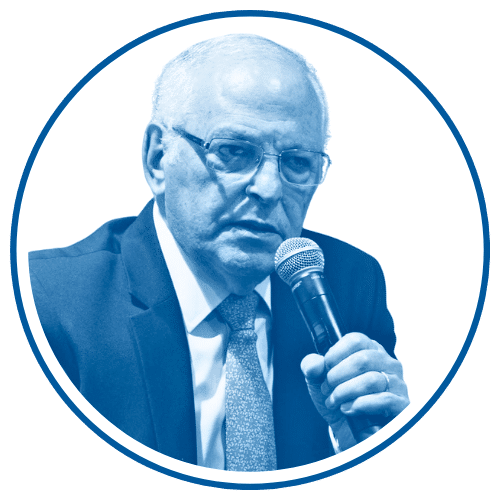
Israel’s response to Hamas’s atrocities and the ensuing multi-front war has been marked by overwhelming military force. While reliance on force was understandable at the time, three years on it is increasingly apparent that force alone has not produced a more secure environment.
Israel’s security forces have demonstrated a remarkable capacity to recover from the devastating failure of October 7 and to inflict heavy blows on hostile forces across the region. One might therefore have expected Israel’s leadership to leverage these achievements to pursue a more stable regional environment.
Instead, the current government appears to be limping on one leg of national security: military power, while neglecting the other essential leg: diplomacy.
Despite repeated Syrian signals of no hostile intent, Israel is overcompensating for the Gaza failure by occupying additional Syrian territory and conducting military operations throughout its territory.
These actions make it harder for Syria’s leadership to maintain and justify a peaceful posture. They also undermine the efforts of a powerful regional and international coalition to guide Syria toward domestic inclusiveness and peaceful relations with its neighbors.
A confident Israeli leadership should take the risks associated with helping that coalition, specifically by trading captured territory for security arrangements. It should take the initiative, urge Washington to convene all relevant stakeholders with one overriding objective: reconciling legitimate Israeli security concerns with the broader effort to enable a stable, inclusive, peaceful Syria to emerge.
Military strength created leverage. Diplomacy might—just might—turn that leverage into lasting security.
The Quiet Durability of Arab-Israeli Relations
Farah Bdour, Policy Fellow

Three years after October 7, it is easy to focus on how profoundly the war in Gaza has damaged perceptions of Israel across the Arab world. Anti-Israel sentiment has risen sharply, diplomatic relations have become increasingly strained, and prospects for expanding the Abraham Accords appear far more distant.
Yet another story deserves attention: the peace treaties and normalization agreements survived circumstances that might reasonably have broken them.
Jordan is the clearest example. Since October 7, the kingdom has confronted the spillover of regional conflict directly, including Iranian missiles and drones, threats from Iran-backed groups, terrorist plots, and sustained defamation campaigns portraying Jordan as complicit in Palestinian suffering.
At the same time, Jordan, Israel, the United States, and other regional partners have repeatedly found themselves on the same side of the defensive equation, most visibly during Iran’s attacks in 2024, the Israel-Iran war in 2025, and the U.S.-Israeli war with Iran in 2026.
This security convergence has not translated into greater public acceptance of Israel. In much of the Arab world, negative perceptions of Israel have deepened. What has changed is more subtle: the regional turmoil has made the practical value of maintaining formal relations with Israel harder to dismiss, even among those who strongly oppose Israeli policies.
Jordan may be the strongest example, but the same tension is visible in Israel’s relationships with Egypt and the UAE. Political distance has grown, while the underlying state-to-state relationships have endured. For Jordanians, that distinction is increasingly important. They can oppose Israel’s policies and conduct in the region while recognizing that the treaty is an instrument of Jordanian statecraft. It provides channels for diplomacy, security coordination, and crisis management precisely when regional conflicts are most likely to spill across borders.
Israel has therefore become harder to embrace politically even as the security architecture connecting it with its Arab neighbors has become harder to replace. The question is whether Israeli policy will eventually make that calculation too costly for its Arab partners to sustain.
Hezbollah’s Decline and the Opportunity for Lebanon
Rose Goldstein, Policy and Government Relations Associate

In the past three years, the balance of power between Israel and Hezbollah has shifted fundamentally. On October 8, Hezbollah launched attacks against Israel in support of Hamas, renewing cross-border fighting that escalated into a sustained Israeli campaign. Over the following year, Israel eliminated much of Hezbollah’s senior leadership, including Secretary General Hassan Nasrallah, and significantly degraded its military capabilities through sustained strikes and operations, including through the pager and walkie-talkie attacks. These gains helped produce the November 2024 ceasefire, with Israel retaining five positions inside southern Lebanon. Hezbollah’s decision to renew fighting during the 2026 Iran war prompted another round of Israeli strikes that further weakened the group.
Stability, however, remains elusive, as Israeli forces retain positions and continue strikes while Hezbollah rejects disarmament. Efforts to expand Lebanese state control face challenges of trust, capacity, sequencing, and enforcement: Lebanon’s government seeks Israeli withdrawal as it extends its authority, while Israel insists on Hezbollah’s disarmament as a condition for withdrawal.
Hezbollah’s reduced military capacity and political clout have created an opportunity for the Lebanese state that did not exist three years ago. The election of President Joseph Aoun and formation of Prime Minister Nawaf Salam’s government brought to power leaders expressly committed to restoring Lebanon’s monopoly over arms and extending the state’s control across the country. Ongoing U.S.- mediated negotiations with Israel offer a potential path forward, but stalled implementation on the ground in southern Lebanon demonstrates the fragility of the opportunity. Transforming the Israel-Lebanon status quo depends not only on Hezbollah’s disarmament, but also on the ability of Lebanese state institutions to fill the security and services gap.
Iran and the New Escalation Ladder
Garrett Nada, Policy Analyst

After October 7, Israel’s security doctrine shifted from containment and deterrence toward proactively eliminating threats. The change is especially clear in Israel’s approach to Iran. In April 2024, Israeli F-35s struck an Iranian diplomatic compound in Damascus, killing two Islamic Revolutionary Guard Corps generals and five officers. Iran, viewing the attack as a provocation, responded 12 days later with an unprecedented barrage of drones, ballistic missiles, and cruise missiles. Israel then struck air defenses protecting an Iranian nuclear site. The so-called “war between wars” had evolved into direct state-on-state attacks, paving the way for another Iranian ballistic missile barrage in October 2024, Israeli and U.S. strikes on Iran’s nuclear program in June 2025, and the joint U.S.-Israeli war on Iran in February 2026.
Iran’s military capabilities have been severely degraded and its economy is under mounting strain, but the regime is not on the verge of collapse and retains the capacity to threaten Israel, U.S. forces, and other regional states. The normalization of direct attacks has added new rungs to the escalation ladder. With both Israel and Iran less risk-averse and operating without clearly defined red lines, the risk of miscalculation is high. Fighting involving Israel and one of Iran’s regional proxies could again spill over into direct Israel-Iran conflict.
Iran’s nuclear program also remains a likely source of conflict. There is no durable military solution: the program is dispersed across multiple sites, some buried deep underground, and technical knowledge cannot be bombed out of existence. Without a durable diplomatic agreement constraining or dismantling the program, Israel and the United States risk having to periodically resort to military action. As of October 2026, Iran is just one front in an open-ended regional conflict.