


Understanding Israel: Secure, Jewish, and Democratic
A Group Learning Experience for Young Professionals

Understanding Israel: Secure, Jewish, and Democratic A Group Learning Experience for Young Professionals is an in-person social and educational opportunity that provides young professionals (20s-40s) from the DMV with an essential overview of the major issues of the Israeli-Palestinian conflict today. This six-part learning series will offer young professionals an opportunity to deepen their understanding of Israel, explore the complex issues shaping its future, and engage in thoughtful conversations with peers and experts. Applications are now open until December 21. No prior expertise required. Be sure to apply as soon as possible for early consideration.
Course at a Glance:
Session 1:
Thursday, January 7, 6:30-9:00 pm
Session 2:
Thursday, January 14, 6:30-8:30 pm
Session 3:
Thursday, January 21, 6:30-8:30 pm
Session 4:
Thursday, January 28, 6:30-8:30 pm
Session 5:
Thursday, February 4, 6:30-8:30 pm
Session 6:
Thursday, February 11, 6:30-9:00 pm
COST: $50 if applying before December 1 | $75 after
Deadline is December 21.
Subsidies available. We do not want cost to be a barrier to participation. Fee includes meals, refreshments, and materials.
Session 1: Shaping the Future: Understanding Israel in the Region
Featured Speakers:
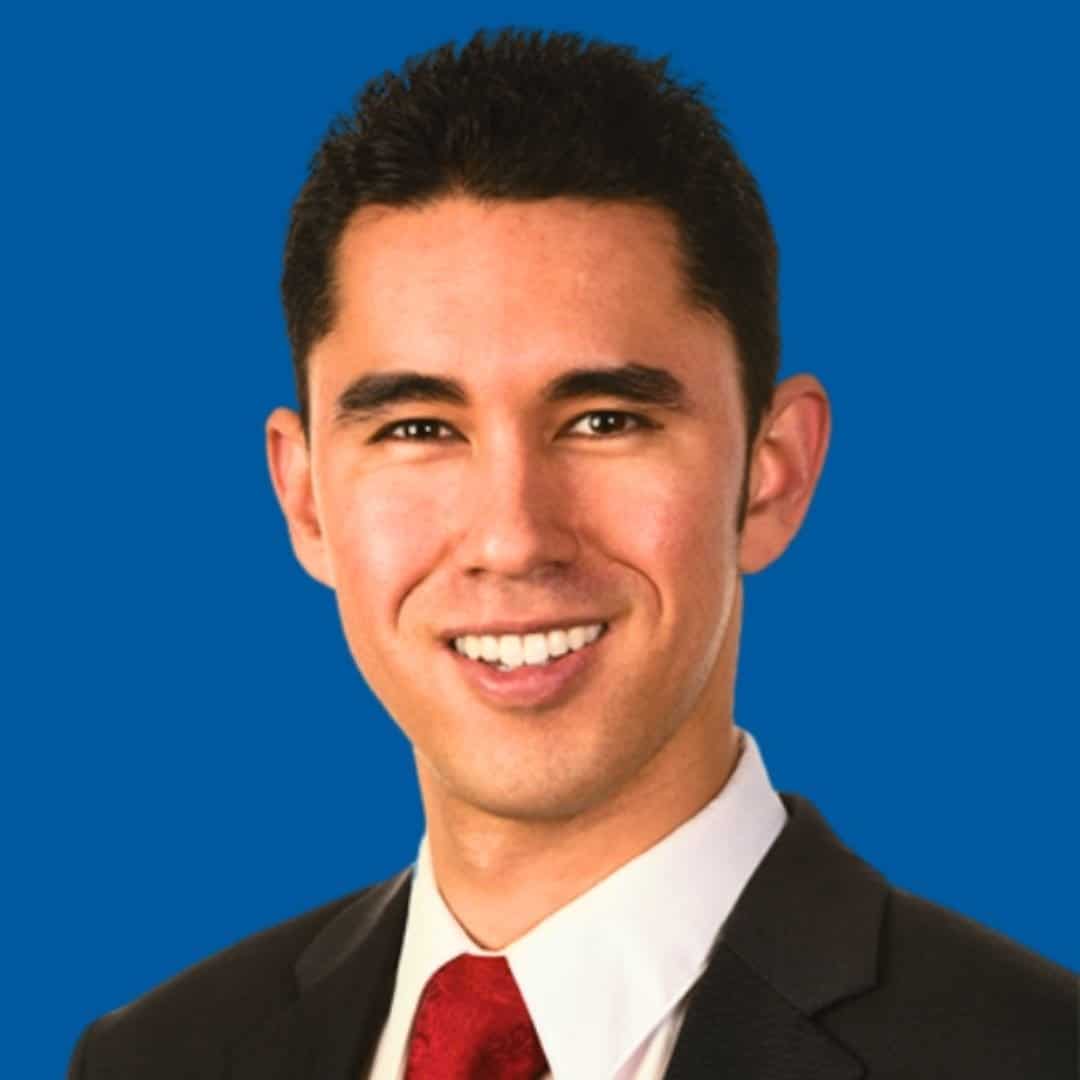
Garrett Nada
This session will examine the historical and political factors influencing Israel and regional dynamics in light of the recent war in Iran.
Garrett Nada, IPF Policy FellowThursday, Jan 7, 6:30-9:00 pm
Session 2: This Moment for Israel
Featured Speakers:

Michael Ratney
Ambassador Michael Ratney, IPF Distinguished Policy FellowThursday, Jan 14, 6:30-8:30 pm
Session 3: Understanding the Territorial Issues in the Israeli-Palestinian Conflict
Featured Speakers:

Michael Koplow
In this session, we will take an in-depth view of both historical and current trends in the West Bank and Gaza. We will also explore the current political landscape and examine the impact of policies in Gaza, West Bank, and Jerusalem.
Michael Koplow, IPF Chief Policy Officer
Thursday, Jan 21, 6:30-8:30 pm
Session 4: The Past, Present and Future of Israeli and Palestinian Identities
Featured Speakers:

Matan Sivek

Ihab Hassan
Session 5: The Future of the US-Israel Relationship
Featured Speakers:

Elisa Ewers
Session 6: Israel Engagement Rooted in Data and Reality
Featured Speakers:

Shanie Reichman
Drawing on recent data, Shanie Reichman will explore how younger Jews are thinking about Israel and how that differs from our assumptions. We will look at what resonates, what doesn’t, and how to build a conversation about Israel that’s real, relevant, and worth having.
Shanie Reichman, IPF Director of Strategic Initiatives and Director, IPF Atid
Thursday, Feb 11, 6:30-9:00 pm
This course is for you if:
• You want to deepen your understanding of the major issues of the Israeli-Palestinian conflict
• You want to increase your knowledge of the policy issues surrounding modern Israel and the conflict
• You seek to join an ongoing community of peers who are navigating similar issues
• You wish to develop your personal narrative and storytelling skills in relation to the conflict
• You want to be empowered to navigate increasingly polarized communal discourse
MEET THE EDUCATORS
Garrett Nada
Garrett Nada is Israel Policy Forum’s Policy Analyst, based in Washington, D.C. He served in several roles at the U.S. Institute of Peace from 2012 to 2025, most recently as a program officer in the Middle East and North Africa Center. As managing editor of “The Iran Primer” website, he closely monitored Iran’s politics, economy, military, foreign policy, and nuclear program. Through a partnership with the Woodrow Wilson International Center for Scholars, Nada also managed “The Islamists” website, which surveyed the evolution of Islamist groups and jihadist movements, such as al Qaeda, ISIS, Hamas, Hezbollah, and the Houthis. He currently serves on the advisory council of the Sage Institute for Foreign Affairs. Nada has briefed U.S. officials, military stakeholders, congressional staff, and diplomats from U.S. allies. His work has been cited by government agencies, media, and academic publications. Nada received an M.A. from The George Washington University and a B.A. from Brandeis University.
Michael Ratney
Michael Ratney served for over three decades as a distinguished U.S. diplomat, most recently as the U.S. ambassador to the Kingdom of Saudi Arabia. Ratney served as the U.S. consul general in Jerusalem, as the chargé d’affaires of the U.S. Embassy to Israel, and in postings in Baghdad, Beirut, Casablanca, Doha, Mexico City, Tunis, Bridgetown, and Washington, D.C. Over his career, Ratney has been at the center of high-profile diplomatic initiatives throughout the Middle East, including as U.S. special envoy for Syria. He taught leadership on the faculty of the National Defense University in Washington and was dean of the State Department’s School of Language Studies. Ratney speaks Arabic and French, is a member of the Council on Foreign Relations, and earned degrees from Boston University and George Washington University.

Michael Koplow
Dr. Michael Koplow is the chief policy officer of Israel Policy Forum, and also serves as a senior research fellow of the Kogod Research Center at the Shalom Hartman Institute of North America. Before coming to Israel Policy Forum, he was the founding program director of the Israel Institute. He holds a Ph.D. in Government from Georgetown University, where he specialized in political development and ideology, and the politics of Middle Eastern states. He writes Israel Policy Forum’s weekly Koplow Column and edits Israel Policy Exchange, which is a leading source for commentary and analysis on Israel and American Jewry, and his work regularly appears in Foreign Affairs, Foreign Policy, the Atlantic, and the Forward, among other publications. In addition to his Ph.D., he holds a B.A. from Brandeis University, a J.D. from New York University, and an A.M. in Middle Eastern Studies from Harvard University.

Ihab Hassan
Ihab Hassan is a Palestinian Christian human-rights and peace advocate, born and raised in Ramallah, West Bank. He holds a BA in Political Science from Birzeit University and an MA in Human Rights from The Catholic University of America in Washington, DC.
He is an outspoken critic of Israeli abuses against Palestinians, Hamas’s repression in Gaza, and violations by the Palestinian Authority. His work focuses on Palestinian Christian communities and on advancing a just, peaceful future in which Palestinians and Jews can coexist with equal human rights, dignity, and safety.
Elisa Ewers
Elisa Ewers has over 25 years of national security and foreign policy experience in the U.S. government, think tanks, academia, and the private sector as an expert on the Middle East and North Africa (MENA), counterterrorism and security cooperation, and multilateral political and economic institutions. She was the senior professional advisor to the Democrats in the Senate on the Middle East and North Africa, nonproliferation and arms control, and international economic statecraft policies. In the Obama and George W. Bush administrations, she was selected as a deputy assistant secretary and served at the White House on the National Security Council, the Departments of State and Defense, U.S. embassies, and the U.S. Mission to the United Nations. She was an adjunct professor at the Johns Hopkins University School of Advanced International Studies and a senior fellow at the Center for a New American Security. Before public service, Ewers’ private sector career included strategy consulting and institutional asset management. She is currently a visiting senior fellow at RAND, is a partner at Scalare Advisors, and serves on the policy council of the American Task Force for Lebanon and on the board of directors of the Navy Marine Corps Relief Society.

Shanie Reichman
Shanie Reichman is the Director of Strategic Initiatives and Director of IPF Atid at Israel Policy Forum, based in New York City, where she works to elevate the discourse around the Israeli-Palestinian conflict. She serves as the founding chair for the Forum Dvorah U.S. committee, an NGO that champions women’s participation in national security and foreign policy decision-making spheres in Israel. Her work has been published in the Forward, eJewishPhilanthropy, the Jerusalem Post, Times of Israel, Hey Alma, Jewish Unpacked, and International Policy Digest. She is a participating author in the book Young Zionist Voices and is pursuing her M.A. in Middle Eastern Studies at CUNY Graduate Center.

Julia 'Rosa' Snyder
Julia ‘Rosa’ Snyder is the Program Coordinator at Israel Policy Forum. She received her Bachelor’s degree in German language and literature, linguistics, and Middle Eastern languages from the University of North Carolina at Chapel Hill and her Master’s in international affairs, focusing on economic and political development, conflict resolution, and the Middle East from Columbia University. Prior to joining Israel Policy Forum, Rosa lived in Israel teaching English and running women’s empowerment programs with the Bedouin community. During Covid, Rosa worked as a programs and events coordinator for a synagogue in North Carolina.
FAQ
Q: Where will all sessions be held?
A: All sessions will be held at the Edlavitch D.C. JCC 1529 16th St NW, Washington, D.C. 20036
Q: Will meals be provided?
A: Yes. All sessions will include dinner.
Q: Will all food served be kosher?
A: Yes, all food served will be kosher.
Q: What if I can’t make it to all sessions?
A: In an effort to create a cohesive learning experience, we require participants to commit to attending each session.
Q: Who else will be in the room?
A: This course is designed for young professionals in their 20s, 30s and 40s, specifically those serving in leadership roles in their community, or with the potential to do so. Please feel free to reach out to us if you have any questions.
Q: I don’t live in the DMV area. Can I still apply?
A: This course is designed for those who live and/or work in the DMV. We hope to offer similar courses in other communities in the near future! Want to bring us to your community? Be in touch.
Q: Do I need to have previous involvement with Israel Policy Forum to apply?
A: No! This course is open to all applicants regardless of previous involvement with Israel Policy Forum.
Q: How much does the course cost?
A: The registration fee, which is heavily subsidized, is $50 if applying before December 1, and $75 thereafter. That said, we do not want cost to be a barrier to participation, so please reach out to us if this presents a hardship. Fee includes meals, refreshments, and materials.