


Understanding Israel’s New Anti-UNRWA Laws
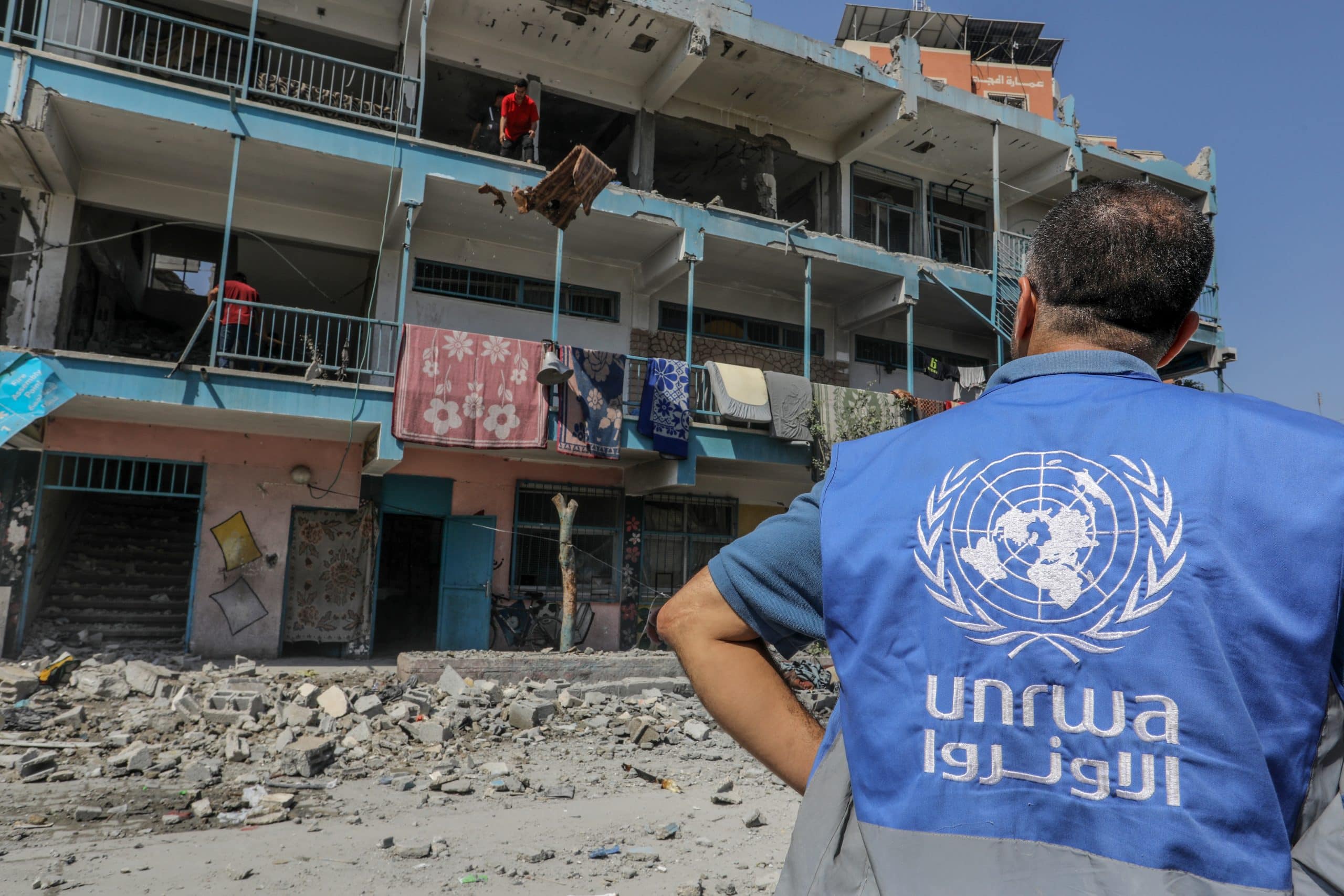
UNRWA has been barred from Israeli territory and from having contact with Israeli officials.
Background
On October 28, 2024, the Knesset passed two laws that will significantly curtail the operations of the United Nations Relief and Work Agency for Palestine Refugees (UNRWA) in East Jerusalem, the West Bank, and Gaza. These legislative moves are part of a concerted political campaign aimed at dismantling UNRWA after the October 7 atrocities. They stem from serious allegations accusing 12 UNRWA personnel of involvement in the October 7 attacks, broader claims that hundreds of its staff hold membership in terrorist organizations, and the infiltration of Hamas into UNRWA facilities.
Israel’s grievances with UNRWA, however, have deeper roots. The agency has historically been deeply divisive among Israelis, seen as perpetuating the Palestinian right of return. Its hereditary refugee status based on identity rather than need has resulted in an ever-expanding number of beneficiaries claiming the right to “return” to what is now Israel.
At the same time, UNRWA is widely regarded as indispensable in delivering essential services to 5.9 million Palestinian refugees, effectively functioning as a quasi-governmental institution across the Palestinian territories, Jordan, Syria, and Lebanon. For many Palestinian refugees, especially in Gaza today, UNRWA’s role has taken on even greater significance as it provides vital emergency support and is the backbone of the humanitarian effort amid a crisis of unprecedented scale and scope.
For more comprehensive background and analysis on UNRWA, see our report: UNRWA at a Crossroads: Charting a Course to Meaningful Reform.
Knesset Legislation Overview
The legislation passed with overwhelming support, due to centrist opposition parties joining with the coalition to vote in favor. Both pieces of legislation will go into effect after 90 days.
Law 1: Ban on UNRWA Operations Within Israeli Territory
Passed with a 92-10 vote, this law prohibits UNRWA from operating in Israeli territory. A combination of two bills advanced in a first Knesset reading in July, this law prevents UNRWA from carrying out any operations in sovereign Israel. The most immediate impact would be felt in East Jerusalem, primarily in the Shuafat Refugee Camp—a no-man’s land separated from the rest of Jerusalem by the separation barrier that nevertheless Israel recognizes as under its sovereignty—where UNRWA plays an outsized role. The law will also mandate the shuttering of UNRWA’s headquarters in the East Jerusalem neighborhood of Ma’alot Dafna, which had already been slated for confiscation by Israeli authorities.
Law 2: Severing Israeli-UNRWA Ties
The second law—passed 87-9—will cut ties between Israel and UNRWA, barring the contact between the agency and Israeli officials that enables it to function in the West Bank and Gaza. This law cancels the Comay-Michelmore Agreement of 1967, also known as “The Exchange of Letters,” signed in the wake of the Six-Day War. (Notably, at the time of signing, Moshe Dayan called it a huge achievement that UNRWA agreed to “bear the burden” of continuing to provide essential services to Palestinians in the West Bank and Gaza.) In this agreement, Israel committed to allowing the free movement of UNRWA’s international staff and trucks through its territory; ensuring the security of UNRWA personnel and property; and providing exemptions from custom duties and taxes. UNRWA relies on Israel’s continued consent to operate, and consequently removing it opens up a host of new challenges.
Israel’s Foreign Ministry has since informed U.N. General Assembly President Philemon Yang that “Israel will continue to work with international partners, including other United Nations agencies, to ensure the facilitation of humanitarian aid to civilians in Gaza in a way that does not undermine Israel’s security. Israel expects the United Nations to contribute to and cooperate in this effort.”

Implications
No contact
The “no contact” policy bars contact between Israeli state officials and authorities and UNRWA representatives, which will significantly affect UNRWA’s management and operations. The aid management and delivery process consists of many steps that require coordination with Israeli authorities at some level. Repercussions of the legislation include:
- Financial barriers: Israeli banks will face legal and logistical constraints in working with UNRWA, jeopardizing salary payments and supply chains critical for operations.
- Personnel limitations: The Foreign and Interior Ministries will no longer be able to issue entry visas for international UNRWA staff, complicating on-the-ground management.
- Customs and goods movement: Coordination with Israeli customs will be prohibited, preventing UNRWA from importing and moving goods through Israel. UNRWA relies on coordination with Israel to facilitate the movement of goods and personnel in and out of the West Bank and Gaza.
Deconfliction and security risks
The legislation ends Israel’s protection and security of UNRWA’s personnel, installations, and property. In the West Bank, UNRWA coordinates closely with the IDF’s Civil Administration, and the severance of communication will disrupt vital deconfliction procedures and hinder civil-military coordination, affecting IDF operations in densely populated and hostile refugee camps where militant groups have proliferated. This breakdown would not only escalate the risk to Israeli soldiers but also open the door to new levels of chaos and unrest.
If the agency is unable to operate in the West Bank, it risks destabilizing an already volatile socioeconomic situation. 100,000 Palestinian laborers who once entered Israel have been barred from doing so since the start of the war, depriving the West Bank of wages that once comprised 20% of its GDP. PA tax revenues withheld by Israel and skyrocketing unemployment rates of 30% (up to 60% in refugee camps) amid restrictions on movement and business closures add to the dire situation. Further unemployment of UNRWA teachers and healthcare workers, school closures exposing students to greater radicalization, and the disruption of social welfare payments and food parcels for 913,000 beneficiaries will make an already bad situation even worse.
Humanitarian work and service provision
While direct UNRWA services between local staff and Palestinian beneficiaries could technically continue without Israeli involvement, the management obstacles posed by the legislation could paralyze much of UNRWA’s operations, which depend on Israeli institutional cooperation. Even basic service provision would require complex workarounds, severely undermining UNRWA’s functional capacity.
The situation in Gaza remains dire, with the needs of 2.1 million beneficiaries at an all-time high amid the humanitarian crisis. Since October 7, Israel has pursued a policy of reduced cooperation with UNRWA in Gaza, while promoting expanded roles for other U.N. agencies and humanitarian organizations. Though UNRWA’s role in Gaza has been visibly sidelined, it remains the logistical backbone of operations, possesses invaluable local expertise, has the manpower on the ground, is uniquely trusted by the Palestinian population, and is the only entity that can bridge the transition from relief to reconstruction. Further strangulating UNRWA under the new legislation will exacerbate the humanitarian crisis, which is marked by severely depleted access to food, water, medicine, and fuel, affecting a population of whom 90% are internally displaced.
No clear immediate replacement option
Israel’s political establishment has fast-tracked this legislation without preparing a clear alternative to UNRWA’s role. Over the next 90 days, efforts to devise a replacement approach will unfold, with several potential options on the table:
- Israel: Israel could assume direct responsibility for parts or all of the humanitarian distribution operations in Gaza and UNRWA’s service provision in the West Bank. This approach, however, carries substantial security risks, heavy financial burdens, and divisive political implications, challenging both the security establishment and public consensus.
- Other U.N. agencies and INGOs: In Gaza, UNRWA’s reduced role has prompted organizations like the World Food Programme to assume greater responsibility for food distribution. But these organizations do not have the logistical capacity or local expertise that UNRWA does, making them ill-equipped to fully take up UNRWA’s mantle within 90 days. In the West Bank, the situation is more complex; UNRWA functions as a quasi-state institution, a structure not easily replicated by other agencies.
- Palestinian Authority: Transferring UNRWA’s service provision to the PA is another theoretical option. However, the Israeli government’s opposition to PA involvement in Gaza, coupled with the PA’s likely reluctance to assume responsibility for UNRWA’s functions without a political horizon, renders this scenario improbable. Such an arrangement could risk further eroding the PA’s legitimacy given that historic encroachment on UNRWA has produced domestic backlash in Palestinian society.
- UNRWA finds workarounds to continue, albeit in a more constrained manner: Some argue that ambiguities in the new laws may allow for possible workarounds. UNRWA might find ways to operate without requiring contact with Israeli state entities by adapting its logistical and operational methods. This could include channeling services through other agencies, relocating to premises outside of Israel, or altering its payment methods. However, this approach is likely to be complex, highly technical, and challenging to implement.
- No option found: Given the divisive nature of dismantling UNRWA without a prepared alternative or a strategic process to transfer responsibilities, no option is also an option. This will produce more chaos, law-and-order challenges, increased suffering for Palestinian civilians, and security challenges for Israel.
Snapshot of Key UNRWA Operations*
West Bank
- 913,000 beneficiaries and 19 refugee camps (including East Jerusalem)
- 96 schools serving 45,195 students and 1,519 teachers
- 43 primary healthcare facilities and 1 hospital with 498 health staff
East Jerusalem
- 10 schools serving 2,056 students and 112 teachers
- 3 healthcare centers with 54 health staff
Gaza (current emergency response)
- 5,000 staff operating out of 13,000 pre-war
- 1,160 health staff continue to work in health centers
- Rolling out psychosocial support support
- Distributing food parcels in the southern governorates
- Carrying out emergency water, sanitation, and hygiene activities
*Data relevant as of 2023