Hamas’ October 7 attack on Israel and the ensuing multi-front war initiated a new chapter in both the Israel-Iran and Israeli-Palestinian conflicts. The West Bank, where the IDF has stepped up its operations against terror groups over the course of the past year, is central to both.
The near-constant operations against Palestinian militias in the West Bank cities and “conventional” warfare pitting the IDF against terrorists is just one of several ways in which the post-October 7 era is reshaping the West Bank—and, by extension, Israel itself. In parallel to legitimate Israeli military activity to thwart Iranian terror incitement and prevent an October 7-style attack on central Israel from the highlands of Samaria, Israel’s political leadership has accelerated its multi-pronged effort to erode Palestinian governance and society.
The goal of such efforts is not to ensure the security of the State of Israel or its citizens, but rather to entrench permanent Israeli control over the West Bank and advance a messianic Greater-Israel vision.
The West Bank Pre-October 7
Superficially, a fragile status quo reigned in the West Bank for nearly two decades following the tumult of the Second Intifada and the construction of the West Bank security barrier. The failure of the peace process froze the interim arrangements of the Oslo Accords in place, and both Israel and the Palestinian Authority (PA) largely resigned themselves to the new status quo. Israel-PA security coordination persisted and deepened in the West Bank, even after Hamas took over Gaza in 2007, keeping the territory relatively quiet.
The situation on the ground, however, was not static. Israel continued to expand the footprint of its settler population, both through settlement growth approved by the Israeli government and the expansion of illegal settlement outposts, often on private Palestinian land. In the late 2010s, West Bank annexation became an increasingly normalized policy position on the Israeli right. With support from the Trump administration, Israel was set to annex parts of the West Bank, an outcome averted in exchange for normalization with the UAE through the Abraham Accords. Israel’s current government, however, has advanced annexation in practice: legalizing outposts, providing cover for illegal settlement activity, eroding administrative distinctions between the West Bank and Israel, and further weakening the PA.
Recent years have seen swathes of PA territory taken over by terror groups, many of whom seek to mimic terror operations in Gaza by building terror tunnels, rockets, and improvised explosive devices (IEDs). This uptick in violence and the PA’s inability to crack down on terror groups in Area A, where they are nominally responsible for security affairs under Oslo, has prompted regular IDF incursions into Palestinian cities, towns, and refugee camps across the northern West Bank. In June 2023, the IDF launched a multi-day operation against terrorists in Jenin, its largest in the West Bank since 2002. The threat of another wave of terror attacks emanating from the West Bank loomed on the horizon. The PA and its president, Mahmoud Abbas, meanwhile, increasingly came to be seen by Palestinians as corrupt, complicit in the Israeli occupation, and an ineffective vehicle to deliver statehood. In recent years, Iran has also funded and armed terror cells in the West Bank as part of its strategy to surround Israel with proxies. These dynamics drove support for Hamas and violent extremism against Israel.

Breaking Down the West Bank Front
October 7 has impacted developments on the ground in West Bank in several ways:
Israeli counterterror operations
Since October 7, Hamas officials have emphasized the connection between the West Bank and Gaza and called on West Bankers to attack Israel as well. Notably, Israeli far-right actions in the West Bank and on the Temple Mount reportedly served as a justification for the October 7 massacre, which Hamas called “Al-Aqsa Flood.” Although a large-scale intifada-style uprising in the West Bank has not materialized, Israel responded to the October 7 attack by cracking down on Hamas, Palestinian Islamic Jihad, and other terror groups in the West Bank that had taken root in Palestinian cities and posed a direct threat to Israeli civilians. On several occasions, Hamas terrorists located in Tulkarem have shot at the Israeli community of Bat Hefer just over the Green Line, underscoring the threat. Rudimentary rocket production efforts and tunnels have been discovered across the northern West Bank.
According to INSS, Palestinians from the West Bank and Jerusalem have carried out over 9,400 terror attacks since October 7, killing 66 Israelis. Since October 7, the IDF has detained more than 15,600 Palestinians in the West Bank. Over 900 Palestinians—civilians and terrorists—have been killed both by the IDF and Israeli settlers.
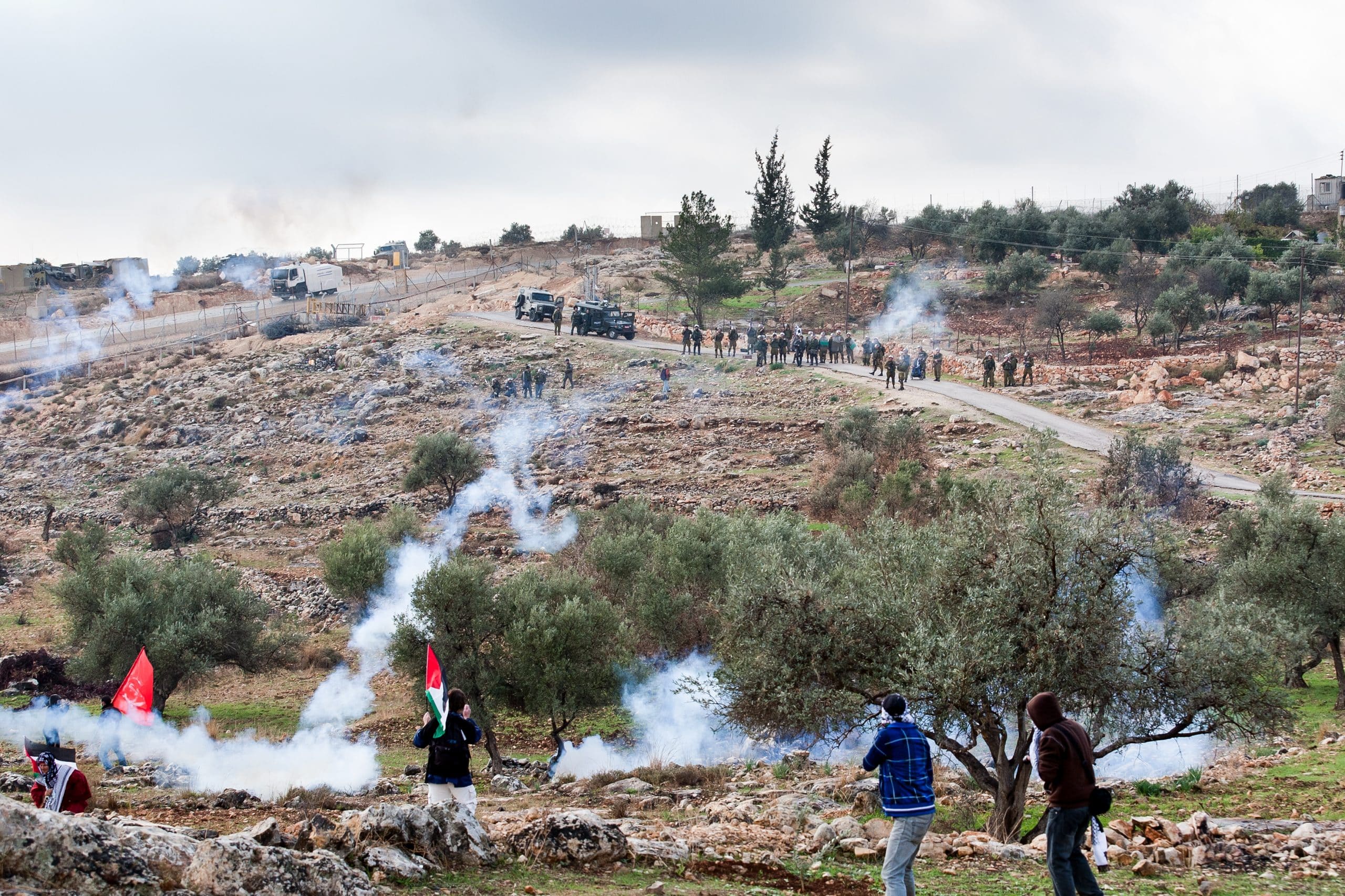
In 2024, the IDF regularly carried out military operations in the heart of the Palestinian cities and refugee camps, particularly in the northern West Bank, focused on killing and arresting terrorists, confiscating weapons and cash, and disrupting their operations. Notably, the IDF has also made use of drones and airstrikes in the West Bank for the first time since the Second Intifada. In late August, the IDF launched Operation Summer Camps, its most intensive military operation in the territory since Defensive Shield in 2002. This 10-day campaign focused on the refugee camps of Jenin, Tulkarem, and Tubas in the northern West Bank.
In late 2024 and early 2025, the Palestinian Authority Security Forces took the rare step of carrying out a high-intensity operation against Hamas and Islamic Jihad-affiliated militants located in the Jenin refugee camp, with the goal of reasserting PA control over the perennial terror hotbed. With an eye toward potential involvement in Gaza’s day after, the PA saw this operation as an opportunity to prove its ability to maintain security and confront militias to bolster its credibility with the incoming Trump administration. The PA forces succeed in confiscating weapons, dismantling IEDs, and arresting gunmen, losing six of its officers in the battles with gunmen in the refugee camp. As the IDF began its own operation in the Jenin refugee camp, the PA forces withdrew to the outskirts and continued arresting militants who fled, suggesting an unusual degree of coordination.
The start of the IDF’s operation in the Jenin, Tulkarem, and Nur al-Shams refugee camps earlier this year marked a turning point for the West Bank as a front of the October 7 war. Known as Operation Iron Wall, this campaign has seen the IDF establish a permanent presence in the refugee camps in order to prevent the resurgence of militant groups. With the goal of dismantling terror infrastructure and easing the movement of troops, the IDF has demolished hundreds of buildings and emptied the camps of their inhabitants, resulting in the displacement of over 40,000 Palestinians. This operation constitutes a shift in the IDF’s tactical approach to fighting terror in the West Bank: seizing, permanently holding, and permanently altering urban areas in Area A —where the Oslo Accords assigned the PA sole security and civil control—rather than merely carrying out temporary incursions.
This operation appears to have been successful in disrupting terror activity in the northern West Bank and preventing violent attacks against Israelis; there were over 100 fewer attacks emanating from the territory from January through May of 2025 as opposed to that same period the previous year. The IDF meaningfully improved its freedom of action throughout the northern West Bank and curtailed the ability of militias to organize and plot attacks and organize in the dense allies of the refugee camps.
But the establishment of an apparently permanent IDF presence in parts of Area A could further undermine the status quo established by Oslo, threaten the legitimacy of the PA and its security forces, and increase the burden of the IDF. Tens of thousands of Palestinians fleeing these areas could have a destabilizing effect on the northern West Bank, further straining the economy and fomenting resentment that leads to militant groups taking root elsewhere in Area A.
Legitimate security rationales aside, far-right ministers in Israel’s government also have the ulterior motive of wanting to collapse the PA, wipe out Palestinian communities, and entrench an Israeli presence throughout the West Bank. The new paradigm established by Operation Iron Wall could be leveraged to advance these goals, at the expense of Israeli security and regional stability.
Settler violence
Violent settler attacks against Palestinian civilians were already on the rise prior to October 7, bolstered by political support from high-ranking figures in the Netanyahu government. The immediate aftermath of October 7 saw an immediate increase in these attacks. According to data from the Israeli security establishment published by Haaretz, there were 1,350 documented attacks on both Palestinians and the IDF by settlers from October 7, 2023 until July 17, 2025. (The reported casualty count of 970 Palestinians does not distinguish between victims of settler violence and terrorists and suspects killed by the IDF.)
The perpetrators often carry out these attacks as reprisals for Palestinian terrorism or rock-throwing (known as “price tag” attacks), but in many instances settler violence is unprovoked and carried out with the goal of driving Palestinians off of their land and expanding the footprint of territory held by settlers. Violent settlers have driven more than 1,600 Palestinians from their homes and depopulated at least 38 rural Palestinian communities, while torching cars, destroying olive groves, ransacking homes, and in some cases even torturing Palestinians. Such attacks have been on the rise since the start of 2025 at the same time as Palestinian terrorism emanating from the West Bank has declined.
One possible factor in emboldening attacks against Palestinians could be the Trump administration’s repeal of the Biden-era executive order that sanctioned violent settlers in the West Bank. Unlike its predecessor, the Trump administration has largely ignored the issue of settler violence, aside from calling for Israel to investigate a recent incident in which a Palestinian American was beaten to death by settlers.
The IDF has been largely ineffective in confronting settler violence, with the military largely functioning as protection for Israeli citizens rather than a neutral enforcer of order, even when Israeli citizens are the ones perpetrating the violence. In some cases, IDF soldiers have participated in attacks. Far-right ministers and MKs have also regularly incited against security officials who speak out against settler violence and the need to confront it, given that the attacks serve their political aspirations of securing Israeli dominance over the West Bank hinterland. Then-Shin Bet Chief Ronen Bar penned a letter to Prime Minister Netanyahu and then-Defense Minister Gallant in August of 2024, urging them to confront settler terrorism. Bar’s stance served as one of several factors motivating the government to dismiss him in March 2025.
Violent settlers have also carried out attacks against the IDF, including a high-profile case on June 30 that saw settlers riot outside and set fire to an IDF installation in the Binyamin region. This incident was widely and openly condemned across the political spectrum, including by Prime Minister Netanyahu and far-right Finance Minister Bezalel Smotrich—while emphasizing their view that the perpetrators are marginal actors not associated with the mainstream settlement movement. Smotrich previously criticized IDF soldiers for shooting at West Bank settlers attacking them, due to his view that “live fire against Jews is forbidden.” The rise in such incidents underscores the threat that settler violence poses to Israeli security and public order in the West Bank at large.
Settlement activity
The war has provided cover for the far-right to translate its political power into tangible gains on the ground in the West Bank. According to Peace Now, 2024 saw the establishment of 53 illegal outposts—as opposed to every year since 1996, when no more than seven were established annually. The government has also accelerated the process of increasing the number of legal settlements, including by establishing new communities, whitewashing existing illegal outposts, and recognizing outposts previously considered “neighborhoods” of parent settlements as independent communities. 2025 has already shaped up to be a record-breaking year for settlement construction approvals, with the Higher Planning Committee already having approved 18,994 units—nearly double the amount approved throughout 2024. Meanwhile, under the auspices of far-right minister Bezalel Smotrich, the Civil Administration has accelerated the land registration process, declaring 25,510 dunams as state land. This effectively doubles the amount declared as state land since the Oslo Accords and paves the way for the land to be used for settlement construction.
For more on the quiet surge in West Bank settlements, see Israel Policy Forum’s recent explainer.
Caption: Aerial view of the Sal’it settlement
Creeping de jure West Bank annexation
In parallel, the Israeli government is taking steps to change the legal status of the West Bank, transitioning it from a temporary military occupation to a formalized system of unequal governance. In his role as minister in the Defense Ministry, Bezalel Smotrich has leveraged his authority over the new Settlements Administration to expedite settlement approvals and prevent enforcement against unlawful settlement construction. Administrative changes to the West Bank’s governance are intended to advance Israeli annexation of the territory without a formal declaration, while creating conditions on the ground that are more suitable for that goal.
Beyond Religious Zionism’s narrow constituency of mainly hard-right settlers, the objective of West Bank annexation has become a mainstream consensus position on the Israeli right. On July 2, Knesset Speaker Amir Ohana and every Likud minister except for Ron Dermer signed a letter calling on Prime Minister Netanyahu to annex the West Bank before the Knesset summer recess. While unlikely to immediately result in a de jure declaration of sovereignty, this statement carries real symbolic weight and reflects a sentiment within Israel’s largest party that will endure beyond the term of the current government.
For more on the status of de jure West Bank annexation, see Israel Policy Forum’s recent explainer.
Sanctions against the PA
Since the war began, the Israeli government has also taken direct action against the PA despite its essential role in maintaining West Bank security. Following October 7, Smotrich—in his capacity as finance minister—withheld millions of shekels in tax revenue that Israel collects on the PA’s behalf. While Smotrich framed this move as a response to the PA’s complicity in terrorism, unwillingness to oppose Hamas, and diplomatic action against Israel, it also serves his ultimate goal of collapsing the PA and imposing direct Israeli rule throughout the West Bank. Opposed by Defense Minister Gallant and top security officials, this move put a tremendous financial strain on the already-weakened PA, which has paid only partial salaries to its employees, including the PA security forces, for years. Adding to the West Bank’s economic crisis, Israel swiftly closed its border crossings to Palestinians with permits to work in Israel, cutting off over 100,000 workers from relatively high-paying jobs that served as a backbone of the Palestinian economy. Combined with internal movement challenges and consecutive limited olive harvests due to access restrictions, these closures have driven Palestinian unemployment from 13% before the war to above 30% and shrunk the West Bank’s GDP by over 20%.
In June 2024 Smotrich agreed to release the tax revenue and to extend a waiver allowing Israeli banks to work with Palestinian financial institutions without facing sanctions. However, in exchange for these concessions, the government approved the legalization of five settlement outposts and implemented sanctions on PA officials. In addition, Israel took control of a PA-administered Judean Desert nature preserve in Area B, an unprecedented step that violated the division of powers laid out in the Oslo Accords. With the PA backing diplomatic action against Israel at the U.N. General Assembly and The Hague, Israel has stepped up its rhetoric delegitimizing the PA and framing it as a terror-supporting entity.
A year later, Smotrich announced he would revoke the banking waiver in response to the UK, Canada, New Zealand, Australia, and Norway imposing personal sanctions on him. This would worsen the current cash glut in the West Bank given the NIS 18 billion-per-year cap on cash exchanges into Israel, a limit that has not been raised despite inflation. In recent months, many Palestinian banks have ceased accepting shekels and a burgeoning black market for currency exchanges. Ending the correspondent banking relations entirely will exacerbate these challenges and severely threaten the Palestinian economy. Smotrich’s move has not yet been implemented and may ultimately require full approval from the Israeli government.Israel’s government is using legitimate gripes with the PA, including its appeasement of Hamas since October 7 and longstanding policies like the prisoner and martyr payments program, as a pretext for undermining the PA’s viability as a counterweight to Hamas and other terror organizations.

Creeping de jure West Bank annexation
In parallel, the Israeli government is taking steps to change the legal status of the West Bank, transitioning it from a temporary military occupation to a formalized system of unequal governance. In his role as minister in the Defense Ministry, Bezalel Smotrich has leveraged his authority over the new Settlements Administration to expedite settlement approvals and prevent enforcement against unlawful settlement construction. Administrative changes to the West Bank’s governance are intended to advance Israeli annexation of the territory without a formal declaration, while creating conditions on the ground that are more suitable for that goal.
For more on the status of de jure West Bank annexation, see Israel Policy Forum’s recent explainer.
Sanctions against the PA
Since the war began, the Israeli government has also taken direct action against the PA despite its essential role in maintaining West Bank security. Following October 7, Smotrich—in his capacity as finance minister—withheld millions of shekels in tax revenue that Israel collects on the PA’s behalf. While Smotrich framed this move as a response to the PA’s complicity in terrorism, unwillingness to oppose Hamas, and diplomatic action against Israel, it also serves his ultimate goal of collapsing the PA and imposing direct Israeli rule throughout the West Bank. Opposed by Defense Minister Gallant and top security officials, this move put a tremendous financial strain on the already-weakened PA, which has paid only partial salaries to its employees, including the PA security forces, for years. Adding to the West Bank’s economic crisis, Israel swiftly closed its border crossings to Palestinians with permits to work in Israel, cutting off over 100,000 workers from relatively high-paying jobs that served as a backbone of the Palestinian economy. Combined with internal movement challenges and consecutive limited olive harvests due to access restrictions, these closures have driven Palestinian unemployment from 13% before the war to above 30% and shrunk the West Bank’s GDP by over 20%.
While the crossings remain closed, in June Smotrich agreed to release the tax revenue and to extend a waiver allowing Israeli banks to work with Palestinian financial institutions without facing sanctions. However, in exchange for these concessions, the government approved the legalization of five settlement outposts and implemented sanctions on PA officials. In addition, Israel took control of a PA-administered Judean Desert nature preserve in Area B, an unprecedented step that violated the division of powers laid out in the Oslo Accords. With the PA backing diplomatic action against Israel at the U.N. General Assembly and The Hague, Israel has stepped up its rhetoric delegitimizing the PA and framing it as a terror-supporting entity. Last month, Foreign Minister Yisrael Katz threatened that Israel would “break and dissolve” the PA in response.
Israel’s government is using legitimate gripes with the PA, including its appeasement of Hamas since October 7 and longstanding policies like the prisoner and martyr payments program, as a pretext for undermining the PA’s viability as a counterweight to Hamas and other terror organizations.
Implications
The West Bank is a unique battlefront because it does not function as a discrete entity separate from Israel, but rather has a porous border with Israeli civilians inside of it, living enmeshed with a much larger Palestinian population. The territory not only presents both conventional security challenges, but also long-term threats posed by gradual annexation and the implementation of Smotrich’s decisive plan, which envisions the “defeat” of Palestinians as a national collective and the establishment of an unequal binational state. Broadly speaking, Israel’s security establishment is clear-eyed about these threats and is reacting justifiably to the immediate threat posed by Palestinian terrorism. But the proactive steps advanced by the far-right on Prime Minister Netanyahu’s watch, including the abetting of settler violence, pose an immediate threat to Palestinians and a long-term threat to the security of both peoples.
The Palestinian population in the West Bank has not demonstrated interest in a large-scale uprising akin to the Second Intifada. But if the economic crisis, settler violence, the deterioration of the PA, and settlement expansion persist, the territory will continue to be fertile ground for efforts by Iran and Hamas to open another full-scale front against Israel. With no obvious end on the horizon to the IDF’s missions in Gaza and the north, protecting Israel’s populous center and civilians in the settlements from terror incursions and lone-wolf attacks already poses a tremendous additional burden on Israel’s security apparatus. Israel’s ongoing counterterror operations in the Palestinian cities may be effective for now, but they are far from an antidote to the problems Israel is creating for itself down the line.